Introduction
Artificial intelligence (AI) and automation have become two of the most transformative forces in today’s business landscape. From data analysis and customer communication to scheduling and workflow management, these technologies are reshaping how professionals work and how companies operate. One industry that stands to benefit significantly — and change profoundly — is the virtual assistant (VA) sector.
Virtual assistants have long served as the human backbone of administrative and operational support. As businesses embrace automation and AI-driven tools, questions naturally arise about what this means for the people behind the screens. Will AI replace virtual assistants? Or will it enhance what they can do?
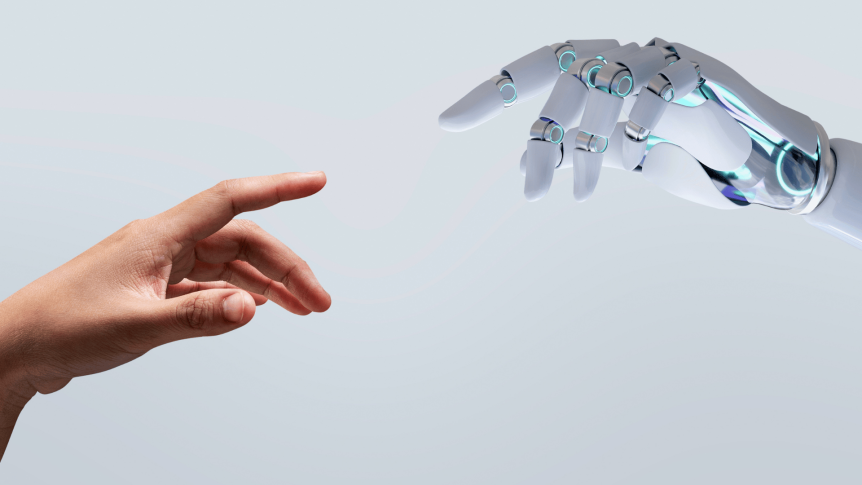
The reality is more nuanced. Rather than replacing human VAs, AI is expected to augment their abilities, allowing them to work more efficiently and strategically. Here’s a closer look at how AI and automation are influencing the virtual assistant industry — and what to expect in the years ahead.
Automation as a Productivity Partner
Automation has already begun to change how virtual assistants manage their workloads. Repetitive tasks such as calendar scheduling, data entry, and email organization can now be handled by automated systems or software integrations. These tools free up VAs to focus on higher-value work — like communication, client coordination, and decision support.
For example, automation platforms like Zapier and Make (formerly Integromat) can connect multiple apps to complete complex workflows with minimal manual input. Email filtering tools and AI-driven scheduling assistants can handle routine correspondence or appointment setting, reducing time spent on administrative repetition.
Instead of replacing human input, automation serves as a productivity partner, helping virtual assistants handle more work with greater accuracy. The result is not fewer jobs, but smarter and more efficient ones.
The Rise of AI-Enhanced Tools
Artificial intelligence is adding another layer of capability to the VA industry. Machine learning algorithms and natural language processing (NLP) allow tools to “understand” and process language, summarize text, and even anticipate user needs. This makes everyday tasks faster and more accurate.
For instance, AI-driven platforms can now generate draft emails, analyze spreadsheets, or produce meeting summaries automatically. Chatbots and customer service tools can respond to common inquiries, leaving the virtual assistant free to handle nuanced or sensitive situations that require a human touch.
In this sense, AI is transforming the VA role from task executor to strategic coordinator. By handling data-heavy or repetitive work, AI gives virtual assistants more time to focus on relationship management, creative thinking, and operational problem-solving — areas where human judgment still matters most.
Evolving Roles and Skill Sets
As AI becomes more integrated into daily workflows, the skills expected of virtual assistants are changing. Future VAs will need to understand not only how to use these tools but how to manage and interpret their outputs.
For example, a VA might need to monitor AI-generated reports, spot inconsistencies, and provide context for decision-makers. They may also be responsible for maintaining automation systems, ensuring they align with business objectives, and troubleshooting when processes don’t go as planned.
Technical literacy, adaptability, and analytical thinking will become increasingly valuable skills in this evolving landscape. Meanwhile, emotional intelligence, communication, and critical thinking — qualities that machines cannot replicate — will remain central to the profession.
The assistants who thrive in this new environment will be those who blend human insight with digital fluency, using technology as an extension of their capabilities rather than a replacement.
Human Connection Still Matters
Despite the rise of automation, human connection remains irreplaceable. Businesses rely on trust, empathy, and clear communication — all areas where virtual assistants excel and AI still struggles. While software can automate reminders or generate responses, it cannot fully understand tone, urgency, or emotion.
Virtual assistants build relationships, interpret context, and anticipate needs in ways that algorithms simply cannot. They understand when a client is overwhelmed, when communication needs a personal touch, or when a sensitive issue requires discretion. These human instincts and interpersonal skills ensure that VAs remain a vital part of business operations, even as automation becomes more common.
In the future, the most effective virtual assistants will likely combine these interpersonal strengths with AI tools, offering a balance of efficiency and empathy — something that neither technology nor humans can achieve alone.
Ethical and Practical Considerations
As AI takes on a larger role in the VA industry, ethical and practical considerations must also come to the forefront. Data privacy, accuracy, and transparency are critical issues when integrating automation into client work. Virtual assistants will need to understand how the tools they use handle sensitive information and ensure compliance with privacy laws and professional standards.
There’s also the matter of accountability. If an AI tool makes a mistake — for example, misinterpreting a client message or scheduling an appointment incorrectly — it’s ultimately the VA’s responsibility to detect and correct it. This reinforces the importance of human oversight, even in highly automated systems.
Businesses that adopt AI-driven support must strike a careful balance: embracing efficiency while maintaining the accountability and integrity that come with human management.
Looking Ahead: Collaboration, Not Replacement
The future of the virtual assistant industry isn’t one of replacement — it’s one of collaboration. AI and automation will continue to streamline workflows, improve accuracy, and reduce time spent on repetitive tasks. But human assistants will remain at the heart of the process, guiding these systems, ensuring quality, and adding the personal understanding that no algorithm can match.
We can expect to see virtual assistants taking on more strategic roles — managing projects, overseeing client relationships, and integrating new technologies into daily operations. AI will handle the routine, while humans handle the relational and interpretive.
In short, the future won’t be “AI or humans.” It will be AI with humans, working together to create a smarter, more efficient, and more connected business world.
Learn how to leverage a “delegation-first” mindset to build the systems and automated workflows that make business growth sustainable CLICK HERE.
Frequently Asked Questions
Will AI eventually replace my virtual assistant?
In 2026, the consensus is that AI replaces tasks, not people. While AI can draft an email or summarize a transcript, it cannot navigate a complex client relationship, understand the subtle “why” behind your business goals, or offer empathy during a crisis. The most successful businesses are those that use a “Centaur” model—pairing the processing power of AI with the strategic judgment and emotional intelligence of a human virtual assistant. This partnership allows one VA to do the work of three, providing you with higher efficiency at a fraction of the cost.
How does an AI-enabled virtual assistant improve my ROI?
An AI-enabled VA moves much faster than a traditional one. By using automation to handle data entry, meeting transcriptions, and initial research, your VA can spend 80% of their time on high-leverage activities like project management and client experience. This means you are paying for strategic brainpower rather than just manual labor. As these tools reduce the “time-to-completion” for standard tasks, your cost-per-result drops significantly, allowing your business to scale more aggressively.
What specific tools are “AI-VAs” using to streamline my business?
Modern VAs are proficient in a stack of tools that act as force multipliers. This includes Large Language Models (LLMs) for content drafting and research, AI-driven scheduling tools that eliminate the back-and-forth of booking meetings, and automated workflow builders like Zapier that sync your CRM with your project management board. By managing these tools for you, your VA ensures your business “engine room” is running on the latest tech without you having to spend hours learning the software yourself.
Is my sensitive data safe if my VA uses AI tools?
Data privacy is a top priority in the 2026 virtual landscape. Professional VAs use enterprise-grade AI versions that do not use your data for training, ensuring your proprietary information stays private. They also follow strict protocols, such as using secure password managers and signed NDAs. When you hire a U.S.-based VA, you gain the added benefit of working with someone subject to domestic data protection laws, providing a layer of accountability that offshore options often lack.
How do I know if my VA is using AI effectively? You will know through the results: faster turnaround times, more insightful reports, and a shift in their communication from “What should I do next?” to “I’ve automated this process and here is the result.” An effective VA won’t just use AI to hide their work; they will use it to be more transparent, providing you with better data and more time to focus on your “zone of genius.” They act as the “human-in-the-loop” who fact-checks and polishes every AI output to maintain your brand’s standards.
What is the “Human-in-the-loop” concept and why is it important?
“Human-in-the-loop” refers to the necessary oversight a VA provides to ensure AI outputs are accurate and on-brand. AI can hallucinate facts or produce tone-deaf communication. A virtual assistant acts as the final filter, ensuring that every automated task meets your specific quality standards. This human oversight is what prevents the “chaotic growth” mentioned earlier and ensures your operations remain disciplined and reliable as you scale.
